
Extreme heat is changing how people live, work, and spend time outside. Across the United States, heat waves are becoming more than a seasonal inconvenience. They are affecting daily routines, increasing demand on HVAC systems, and making indoor air quality an even more important part of comfort and well-being at home.
When outdoor temperatures climb, people naturally spend more time indoors. Homes become places of relief from dangerous heat, especially for older adults, children, individuals with health conditions, and anyone looking to limit time outside during the hottest parts of the day.
The CDC notes that heat can contribute to serious health impacts, including heat exhaustion and heat stroke, and recommends using air conditioning or seeking a cooled location during extreme heat events.
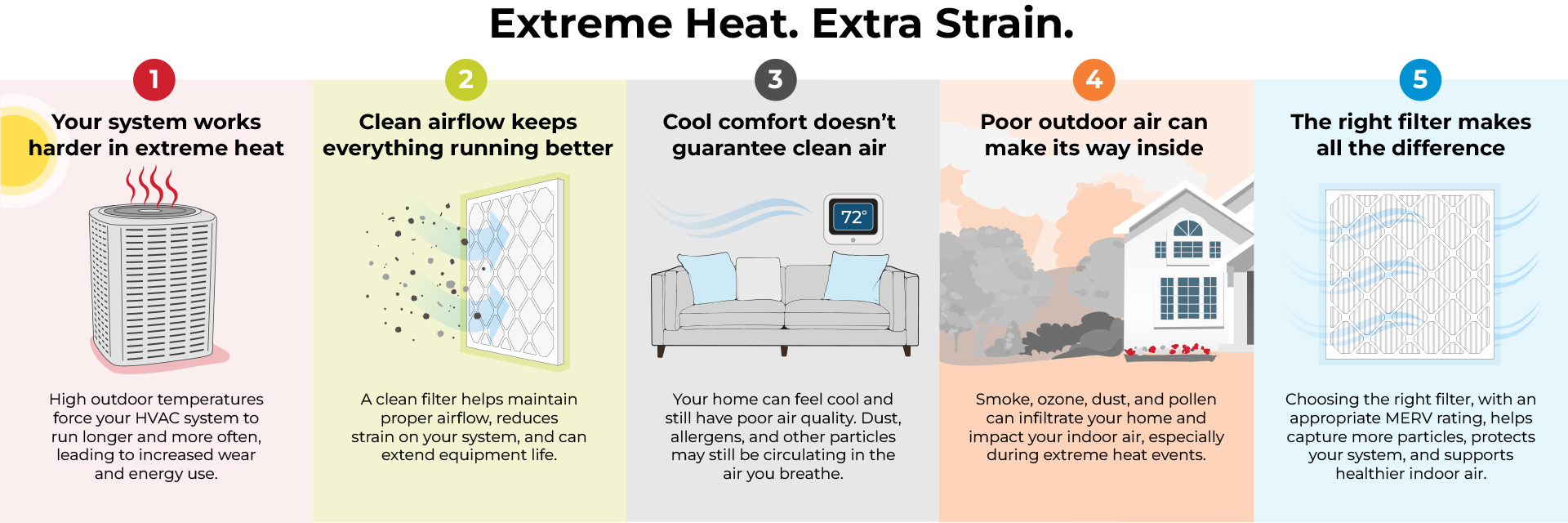
As families spend more time inside, HVAC systems work harder to maintain a comfortable indoor environment. Here are five things homeowners should know about HVAC performance, filtration, and indoor air quality during periods of extreme heat. Extreme_Heat_HVAC_flyer_v2_AFP-13-158 Download
1. Your HVAC System Works Harder During Extreme Heat
During heat waves, air conditioning systems often run longer and more frequently to maintain a comfortable indoor temperature. This added demand can increase energy use and place additional strain on the system, especially if maintenance has been delayed.
2. Airflow Matters
Good airflow is essential for comfort and system performance. A dirty or overloaded air filter can restrict airflow, making it harder for your HVAC system to move conditioned air throughout the home. Replacing filters regularly can help support airflow and reduce unnecessary stress on the system.
3. Cooling and Air Quality Are Not the Same
A home may feel cooler while still containing airborne particles such as dust, pollen, pet dander, or smoke particles that enter from outdoors. During extreme heat, windows and doors often stay closed for longer periods, making filtration and air circulation more important.
4. Outdoor Air Conditions Can Affect Indoor Air
Extreme heat can coincide with poor outdoor air quality, including elevated ozone, dust, or wildfire smoke in some regions. When outdoor conditions are poor, the air inside the home can also be affected, especially if particles enter through doors, windows, leaks, or ventilation pathways.
The EPA notes that indoor air quality can become a concern during extreme heat events, especially when homes are closed up for long periods or when outdoor air conditions are poor. The EPA also provides guidance on air cleaners and HVAC filters as tools that can help reduce airborne particles inside homes.
5. The Right Filter Can Help Support Cleaner Indoor Air
Choosing the right air filter can help your HVAC system capture common airborne particles while still supporting proper system airflow. Homeowners should select a filter that fits properly, is changed on schedule, and has a MERV rating appropriate for their system and indoor air quality needs. For homes where a higher-efficiency residential filter is appropriate, filters such as NaturalAire® MERV 13 can help capture smaller airborne particles while supporting cleaner air throughout the home.
Extreme heat is a reminder that home comfort depends on more than temperature alone. A well-maintained HVAC system, supported by the right air filter, can help improve airflow, reduce system strain, and support cleaner indoor air when families need their homes to perform their best.
As extreme heat continues to push families indoors, the air inside the home becomes even more important. AAF’s NaturalAire® pleated air filters are designed to capture everyday particles like dust, lint, pollen, and pet dander, helping your HVAC system deliver cleaner air throughout your home. When it’s time for a replacement, explore the full range of NaturalAire pleated filters and choose the right MERV rating for your home, your system, and your indoor air quality needs.


