
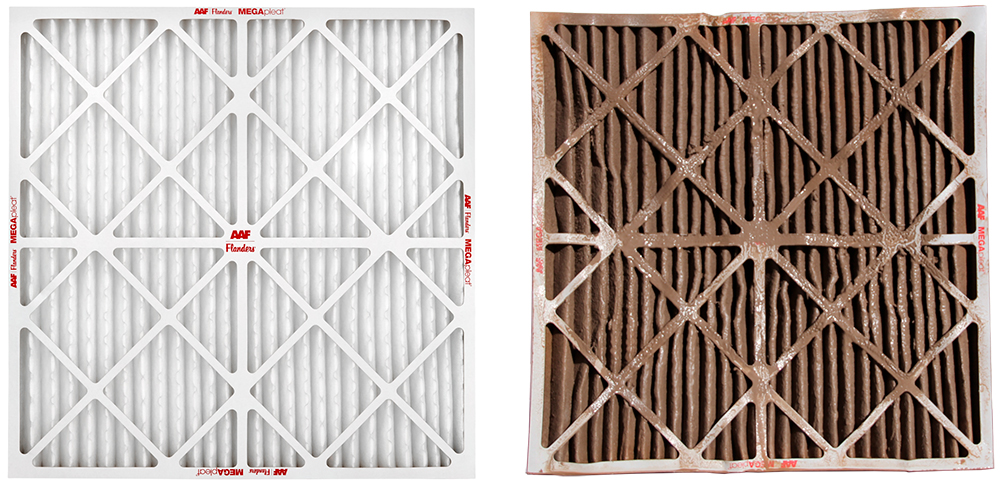
When selecting air filters, it’s easy to focus on efficiency ratings like MERV or even initial resistance. But one of the most important and often underutilized metrics is dust holding capacity.
Dust holding capacity doesn’t just determine how long a filter lasts. It influences energy consumption, maintenance frequency, and ultimately the total cost of operating an HVAC system. Understanding how it works and what drives it can lead to better filtration decisions across a wide range of applications.
What Is Dust Holding Capacity?
Dust holding capacity refers to the amount of particulate matter a filter can capture and retain before reaching its recommended final pressure drop. As dust accumulates on the media, resistance to airflow increases. At a certain point, typically around 1 to 1.5 inches of water gauge, the filter should be replaced to maintain proper system performance.

Unlike efficiency, dust holding capacity isn’t a single fixed value you’ll typically find on a datasheet. That’s because it depends heavily on real-world conditions, including the size, type, and characteristics of the dust being captured.
This is why two filters with the same efficiency rating can perform very differently over time.
Why It Matters More Than You Think
Dust holding capacity is often viewed as a maintenance metric, but its impact goes much further.
As filters load, resistance increases, forcing fans to work harder to maintain airflow. This directly increases energy consumption. In fact, filtration-related pressure drop is one of the most consistent and controllable contributors to HVAC energy use.
There’s also a performance aspect. As resistance rises, airflow can drop if systems are not designed to compensate. That can affect ventilation rates, temperature control, and even process stability in critical environments.
And of course, there’s maintenance. Filters that load quickly require more frequent replacement, increasing labor costs and operational disruptions.
How Dust Holding Capacity Is Evaluated
To compare filters objectively, the industry relies on standardized testing such as ASHRAE 52.2. In this test, filters are exposed to a controlled dust feed under consistent conditions.
Dust is typically introduced in increments, often around 30 grams at a time, which can roughly represent a month of real-world loading in many environments. As dust is added, resistance is measured until the filter reaches its final pressure drop.
What this reveals is not just how a filter performs when clean, but how it behaves over time, a much more meaningful indicator of real-world performance.
Standard vs. High vs. Premium: A Performance Gap
The differences in dust holding capacity become clear when comparing filter designs.

A standard 2-inch pleated filter may reach its final pressure drop after capturing around 60 grams of dust, often just two to three months of service.
A high-capacity version, designed with more media surface area, may handle 90 grams or more, extending service life by an additional month or longer.
Premium filters can go significantly further, in some cases exceeding 200 grams before reaching the same pressure drop. Depending on the application, that could mean six months to a year of service life.
That difference isn’t incremental; it’s exponential in terms of operational impact.
What Drives Higher Dust Holding Capacity?
Three primary design factors influence how much dust a filter can hold:

Together, these factors determine whether a filter loads gradually and predictably or quickly and inefficiently.
The Energy Reality: Performance Over Time
One important nuance is that higher-capacity filters may sometimes start with slightly higher initial resistance. On paper, that might suggest higher energy use.
But in practice, filters are only “clean” for a very short period. Because higher-capacity filters load more gradually, they often maintain lower average resistance over their lifespan resulting in lower overall energy consumption.
This highlights an important shift in thinking: filtration performance should be evaluated over time, not just at installation.
The Total Cost Perspective
Dust holding capacity plays a major role in total cost of ownership.
A standard filter requiring replacement every three months leads to four changeouts per year. A premium filter lasting six to twelve months may reduce that to one or two.
That difference translates into:
When combined with energy savings, the long-term financial impact can be substantial.
Many facilities are now using total cost of ownership models to evaluate filtration decisions factoring in energy, lifespan, and service costs rather than focusing solely on upfront price.
Beyond the Basics: Where This Matters Most
While dust holding capacity is important in any HVAC system, it becomes especially critical in:
The Bottom Line
Dust holding capacity is more than a technical specification, it’s a key driver of real-world filter performance.
Filters with higher dust holding capacity last longer, maintain more stable resistance, and reduce the burden on HVAC systems. The result is lower energy use, fewer changeouts, and improved operational consistency.
For engineers and facility managers, the takeaway is clear: don’t evaluate filters based solely on efficiency or initial cost. Look at how they perform over time.
Because when it comes to filtration, what happens after installation is what truly drives value.
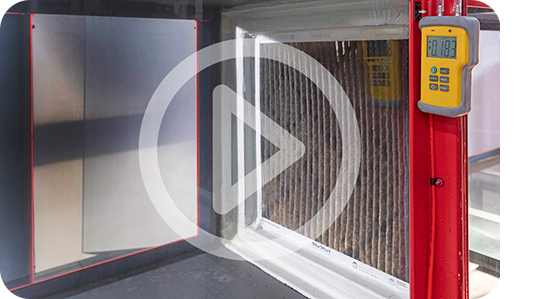
To learn more about how dust holding capacity impacts filter life and energy use, watch the companion video.
AAF is a global leader in air filtration for mission-critical environments, delivering expert solutions that protect operations and maintain optimal air quality.
Connect with an AAF expert to create a filtration strategy tailored to your facility’s needs.


